 Update: Dan Warren pointed us to this watercolor by Zina Saunders that sums up Palin's attitude toward fruitfly research.
Update: Jerry Coyne has join the fray.
 Update: Dan Warren pointed us to this watercolor by Zina Saunders that sums up Palin's attitude toward fruitfly research.
 A while back, I was asked to join an editorial board for a new open-access journal called "Theoretical Biology Insights," published by Libertas Academica. I think open access is great, and I am familiar with another LA journal, Evolutionary Bioinformatics, that has published some good things. I responded enthusiastically, and was added to the slate. I haven't yet been involved with the journal in any other way, but it is really just starting out.
 As my lab strives to adopt increasingly high throughput molecular practices, we've hit a few bumps along the way. One involves the first step in the process of obtaining DNA sequence data: extraction. As a molecular biologist, I've grown up in the era of kits: I've always done genomic extractions by pulling a Qiagen/Promega/Viogene kit off the shelf, dropping a chunk of tissue into a tube and following instructions. This simple and convenient approach, however, is challenged by the needs of the very high throughput facility we're working with. They're asking for genomic DNA with a 260/280 ratio (a measure of a sample's quality that reflects the ratio of DNA to undesirable proteins) between 1.8 and 2.0. Essentially, they're asking for genomic DNA that is completely free of protein contaminants. Unfortunately, kits that rely on a silica filters tend to give us ratios in the 1.2-1.3 range. After a week of experimentation, we've been able to get samples with ratios in the 1.6-1.7 range, but only via phenol-chloroform extraction. Although I've spent my career avoiding a method that has always been described as "unpleasant", several gel-based methods make the phenol-chloroform process relatively painless (check out Phase Lock Gel from Eppendorf [apparently discontinued] and MaXtract from Qiagen). I'm sure we're not the first to encounter this problem, but hopefully this post will help others avoid the trouble of extracting dozens of samples only to be told later that the resulting samples weren't good enough!
 What's the worst part about making figures for phylogeny papers? When I sat down yesterday to make some new figures I realized that my answer was the same as it was ten years ago: adding support values to each node by hand using programs like Adobe Illustrator. I decided I was never going to go through this archaic error-prone process again. In sharing my solution here, I hope that none of you will either! The text below is an annottated R script that does most of the hard work for you (you'll still have to tweak a few things in Illustrator). Of course, you'll need to get familiar with basic R functions for phylogentics before attempting to use these scripts. The best way to do this is to pick up a copy of Paradis' nice little introductory textabe/half/amzn/bn. Don't be lazy and tell yourself you can label your nodes by hand quicker than you could learn R. This might be true if you only had to label one tree, but what are you going to do for your next paper, or when the reviewers advise you to re-run your analyses? If you know how to use the scripts below you'll just be able to plug any tree in and have your labeled tree almost instantly!
 The parsimony versus likelihood debate seems to have cooled off considerably in recent years. Still, we don't know how complex of a model is appropriate for building trees from DNA sequence data. This is expressed, for example, by the question of how many separate partitions should be used for a particular data set. Basically, we create models with widely varying numbers of parameters, and it is not always obvious when to stop doing this to avoid overparameterization.
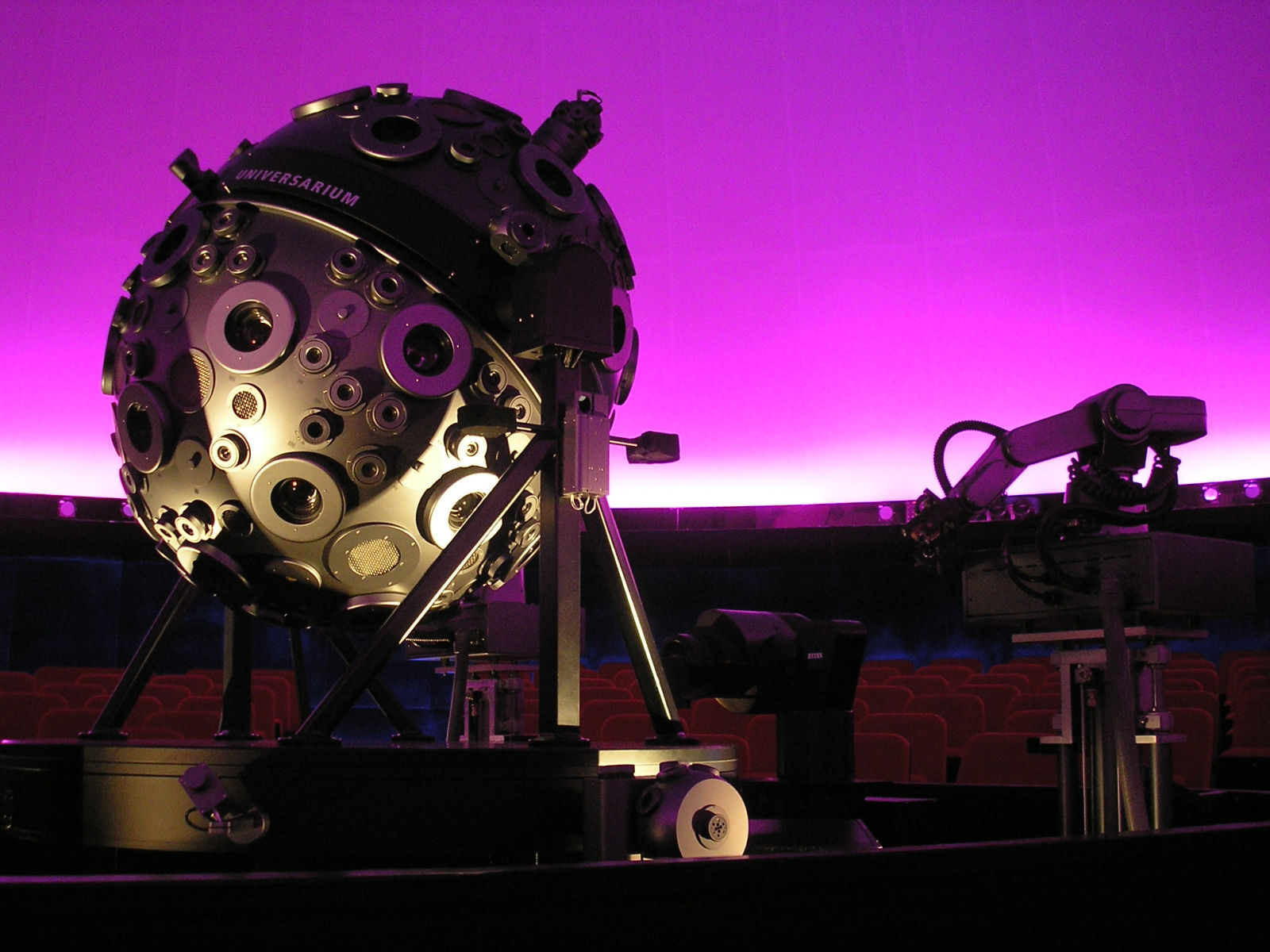 While occupants of the White House clearly have indirect effects on nearly every aspect of our lives, at least two phrases or topics mentioned in last night's presidential debate directly concern science.
 McCain refers to the item as an "overhead projector," conjuring images of those little projectors on carts in public school libraries all over America, but calling this piece of equipment an overhead projector is like calling the space shuttle a bottle rocket.
 There's a new journal by Informa Press called "Mitochondrial DNA". From the announcement by the editor-in-chief, Rob Desalle, the list of topics that this journal hopes to cover is as follows:
 I'm not really sure if this is a recent phenomenon or not, but there is a super-abundance of people out there who believe in "weird things" - or, things that are directly contradicted by scientific information. Painting with a broad brush, I would include things like creationism, but also anti-vaccination, psychic detectives, Sept. 11 conspiracy theories, alien abductions, etc. I'm sure you can think of your own examples (it's worth clicking on that one). One interesting thing about these types of beliefs is that they cut across the "divide" between conservatives and liberals; there are examples on both sides of the aisle. Given this, I've been thinking about what people with beliefs like this have in common. It seems to me that some of these ways of thinking might be on the rise across all of our society, and could potentially explain the rise of such distinctly different phenomena as the Discovery Institute and the crusade against vaccinating children.
 There is a new journal, Evolutionary Applications, that everyone should check out. I know there's a glut of journals out there, so sometimes new ones can get lost in the shuffle. But I think the first three issues of this journal (available online free in 2008) speak for themselves. First of all, there are papers from many outstanding scientists that have already been published. Second, I think this journal covers a subject that is of critical importance. Evolutionary applications in medicine, for example, will likely form a cornerstone of many advances in health care over the coming years. Showing that our work has practical importance to society may also help in the discussion about the role of evolution in education. So, check it out!


